Lesson 1
Building with DIDs and Verifiable Credentials
Tools, trust, and the future of decentralized identity on XRPL.

Decentralized identity is more than a concept: it’s a live, evolving stack ready to be built into real applications. And if you’re a developer, the XRP Ledger offers everything you need to bring this identity revolution to life.
From standards-compliant DID methods to credential objects anchored on a high-speed blockchain, XRPL gives developers a unique toolkit that balances user control, regulatory compliance, and global interoperability.
This lesson explores the tools, APIs, and SDKs available for building with DIDs and verifiable credentials. Furthermore, we’ll look at key future trends and XRPL’s role in shaping them.
Developer Tooling: SDKs and Open Source Resources
To build with DiD and verifiable credentials on XRPL, developers can tap into a growing ecosystem of open-source tooling and libraries.
Here’s where to start:
- XRPL’s Official Documentation: The primary hub for XRPL documentation, with early SDKs and implementation guides for identity standards like XLS-40 (DIDs) and XLS-70 (Credentials).
- XRPL’s DID Documentation: XRPL documentation on working with DIDs.
- Github-based XRPL standards discussions: Essential reading for this type of development work, and a great place for info on many such standards mentioned herein.
- VC Toolkits – Some of these are beginning to emerge lately, focused on various chains. It may prove useful to look into non-XRPL environment toolkits for inspiration about the kind of functionality you’re interested in building out. (For example, there is a DIDKit written in Rust, Veramo in Javascript, Universal Resolver and Universal Registrar from the Decentralized Identity Foundation, and many more.)
Many of these tools are in active development, with rapid contributions from the broader decentralized identity and XRPL developer communities.

Once you have the tools, it’s time to start integrating DIDs into real applications.
Here are a few practical examples:
- Passwordless Login: Replace username-password systems with DID-based authentication. A user signs in by proving ownership of their DID via cryptographic signatures.
- Regulatory Onboarding: Integrate KYC credentials into user wallets. Instead of manually submitting documents, users present a VC issued by a bank or third party.
- Cross-Platform Identity: Let users maintain a single identity across multiple apps or services. Verifying once, then reusing that verification anywhere VCs are accepted.
With XRPL’s low latency and low fees, these identity flows happen in real time, with no friction for users and no bottlenecks for apps.
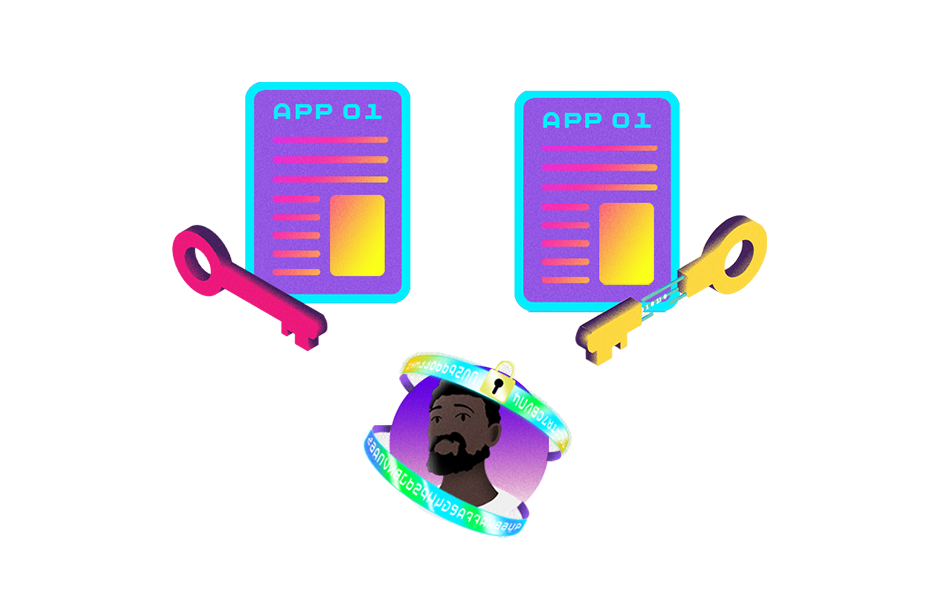
Privacy + Compliance: XRPL’s Identity Balance
One of the biggest challenges in digital identity is striking a balance between regulatory compliance and user privacy. Fortunately, XRPL’s credential architecture supports both:
- KYC/AML Compliance: Through XLS-70 credentials, users can prove they’ve passed KYC without exposing raw documents.
- Selective Disclosure: Users can share only the required credential claim (e.g., “Over 18”) instead of full identity info.
- Regulatory Alignment: XRPL’s identity stack maps to frameworks like FATF, GDPR, and ISO standards.
By anchoring compliance at the protocol layer – rather than via centralized databases – apps can stay regulation-ready without ever taking custody of user data.
This is particularly important for financial apps, where identity checks are mandatory but user privacy is paramount.

Looking ahead, the XRPL identity ecosystem is poised to play a significant role in the next phase of digital identity evolution.
Emerging trends include:
- Regulatory Acceptance: As VCs become legally recognized (e.g., eIDAS 2.0 in Europe), XRPL’s standards-compliant approach positions it for mainstream adoption.
- ISO 20022 Integration: As XRPL aligns with ISO 20022 for messaging and financial data standards, identity data can be cleanly integrated into institutional finance.
- Smart Credential Logic: Future context-aware wallets may automatically determine which credentials to present, which to hide, and when to request new ones. (For example, imagine if you login to a foreign-based DeFi protocol, and it requires a certain proof of residency. Such a wallet could recognize which of your VCs contain such a claim and prepare a minimally acceptable disclosure to obtain access.)
- Interoperability Layers: DID registries, blockchain bridges, and identity hubs will allow XRPL-based DIDs to operate across ecosystems like Ethereum, Hyperledger, or mobile ID platforms.
XRPL’s long-term vision involves global, standards-based infrastructure where decentralized identity is not just accepted–but expected.

Now It’s Your Turn: Start Building
DIDs and verifiable credentials are redefining digital trust – and XRPL gives you the tools to bring that trust to life.
Whether you’re building a wallet, a DeFi platform, or an enterprise compliance solution, the building blocks are ready:
- Use did:xrpl to anchor identity
- Issue VCs with XLS-70
- Protect user privacy with selective disclosure
- Prepare for interoperability and regulation
And most importantly: contribute. The XRPL identity ecosystem is open, evolving, and developer-driven. Your code, your ideas, and your feedback will help shape the standards of tomorrow.
So dive into the dev portal, explore the repos, and start building the future of identity–one DID at a time.